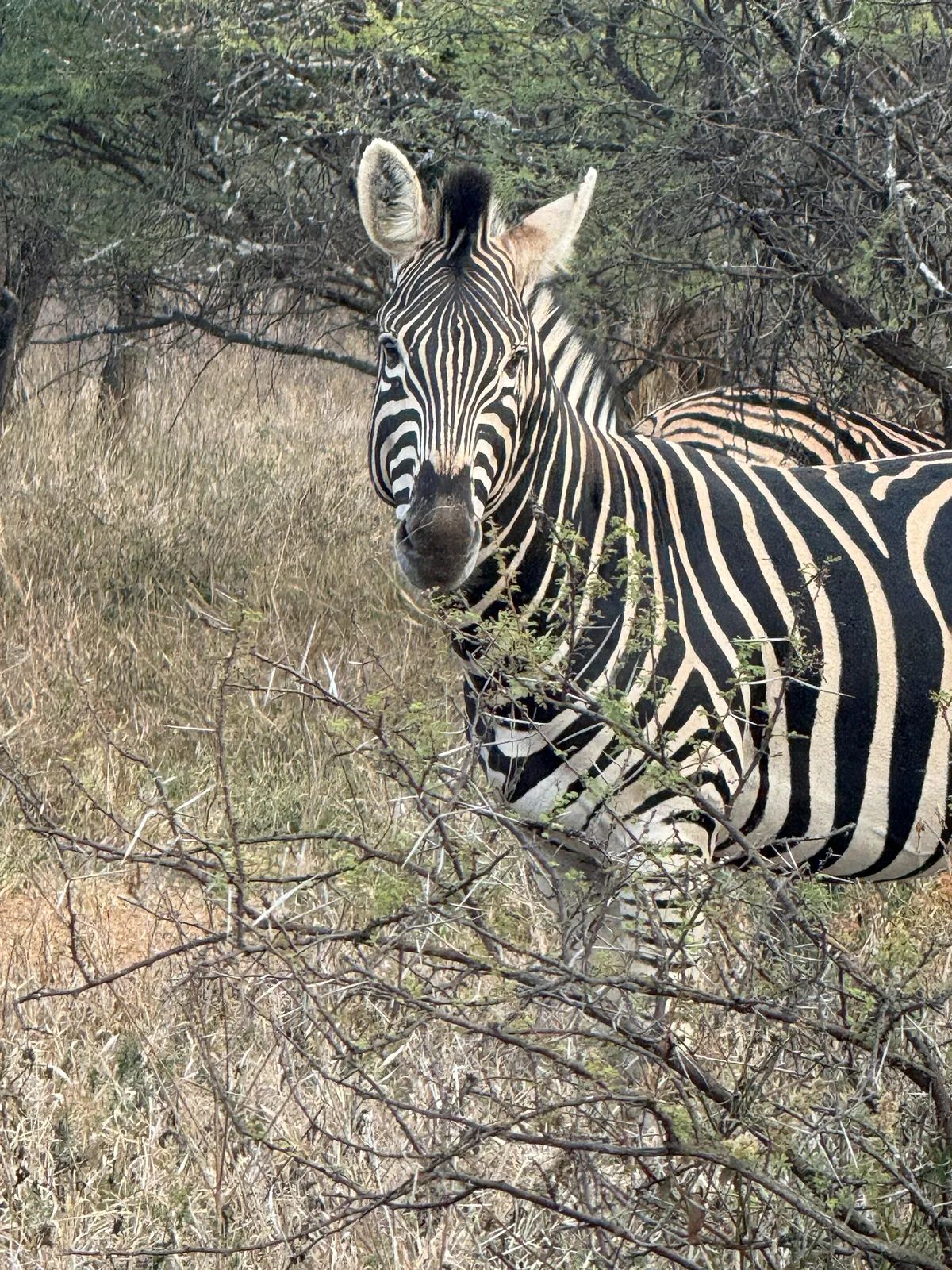
Winter in the Waterberg is dry. By October the bush is brown, the grass is short and everything is waiting.
Then, somewhere between late October and November, the first proper thunderstorm rolls in. The dust settles, the air smells of rain on hot ground, and within days the bush starts turning green. From then until about March, afternoon storms are part of the deal.
The impala baby boom
The estate's own game count in September listed around 800 impala on Shona Langa. Impala are very organised about babies: most of the ewes give birth within a few weeks of each other, from late November into December, just as the new grass comes through.
In the wild, the idea is simple. So many lambs arrive at once that predators can't catch them all. On our estate there are no predators at all, so the lambs get to just be lambs.
If you're here in late November or December, keep an eye on the impala herds. The lambs are the small ones bouncing around like they've had too much sugar.
Other little ones
Summer is baby season for others too. Warthog piglets usually arrive around the start of the rains, trotting after their mothers with their tails straight up like tiny aerials.
The giraffe, 29 of them in the September count, don't bother with seasons at all. Nobody told the giraffes to hurry.
The birds come back
November is when the summer visitors return. The one you'll hear first is the woodland kingfisher: a bright blue bird with a call like someone running a fingernail along a comb, over and over. It arrives with the first rains and stays until about March or April. For a lot of South Africans, that call means summer has properly started.
Why November works
- The bush is green, the waterholes fill up, and the days are warm, often in the thirties.
- Afternoon storms are common, so braai a little earlier, or wait for the storm to pass.
- After the storm, the boma and the wood-fired hot tub are waiting.
- There are no public holidays in November, so it's a quiet month to have the whole place to yourselves.
One honest note
Summer is also when snakes are most active. There aren't many on the estate, and the rule is simple: if you see a snake, turn around and walk away, and never touch it.
Shona at a glance
- The whole lodge is yours: two bedrooms, sleeps 4, with stretchers for up to 2 more guests.
- A wood-fired hot tub, a private boma and braai, and your own game viewer.
- About 2,000 hectares of estate in the heart of the Waterberg. The September 2026 game count lists around 800 impala, 175 kudu, 170 blue wildebeest, 100 nyala, 85 waterbuck, 65 zebra and 29 giraffe, among others.
- No Big Five and no predators, so you can walk the estate freely (the snake rule applies).
- Near Bela-Bela, about 2.5 hours from Pretoria.